
Filters
Draxin
A Scientific Overview of the Axon-Guidance Protein That Shapes Neural Wiring
Draxin, encoded by the DRAXIN gene, is a chemorepulsive axon-guidance protein involved in neural development, commissural axon navigation, Netrin-1/DCC signaling, and Wnt pathway regulation.
Gentaur
Scientific Publications

Draxin
What is Draxin?
Draxin, also written as DRAXIN, is a protein-coding gene product known as dorsal inhibitory axon guidance protein. In neuroscience, Draxin is mainly studied as a secreted extracellular guidance cue that influences how growing axons navigate during nervous system development. In humans, UniProt describes Draxin as a chemorepulsive guidance protein for commissural axons and notes its ability to inhibit or repel neurite outgrowth from dorsal spinal cord tissue.

Why Draxin Matters in Neuroscience?
The nervous system depends on accurate connectivity. A neuron may survive and differentiate normally, but if its axon grows in the wrong direction, neural circuits can form incorrectly. Draxin is important because it contributes to axon pathfinding, especially in commissural systems where axons cross the midline of the developing central nervous system.
The original discovery study described Draxin as a previously unknown chemorepulsive axon-guidance molecule required for the development of spinal cord and forebrain commissures. That work showed that Draxin could inhibit or repel neurite outgrowth in experimental explant systems, supporting its role as a repulsive guidance cue.
NCBI : Implications of draxin in neurological disorders

Figure from Nature : Draxin−/− mice have severe defects in corticofugal and thalamocortical projections.
Biological Function of Draxin
Draxin is most strongly associated with the following biological processes :
Axon guidance :
=> Draxin helps regulate the direction of axonal growth by repelling or restricting neurite extension in specific developmental contexts.

Axon Guidance | ScienceDirect
Commissural axon development :
=> Commissural axons are axons that cross from one side of the nervous system to the other. Draxin is implicated in the development of spinal cord and forebrain commissures, structures that require highly coordinated midline-crossing behavior.

Spinal cord commissural axons development: pre and post‐crossing guidance mechanisms | ResearchGate
Netrin-1 receptor signaling :
=> Draxin interacts with multiple receptors associated with the Netrin pathway, including DCC, Neogenin, UNC5 family receptors, and DSCAM. These receptor interactions help explain why Draxin can influence axonal outgrowth and guidance decisions.
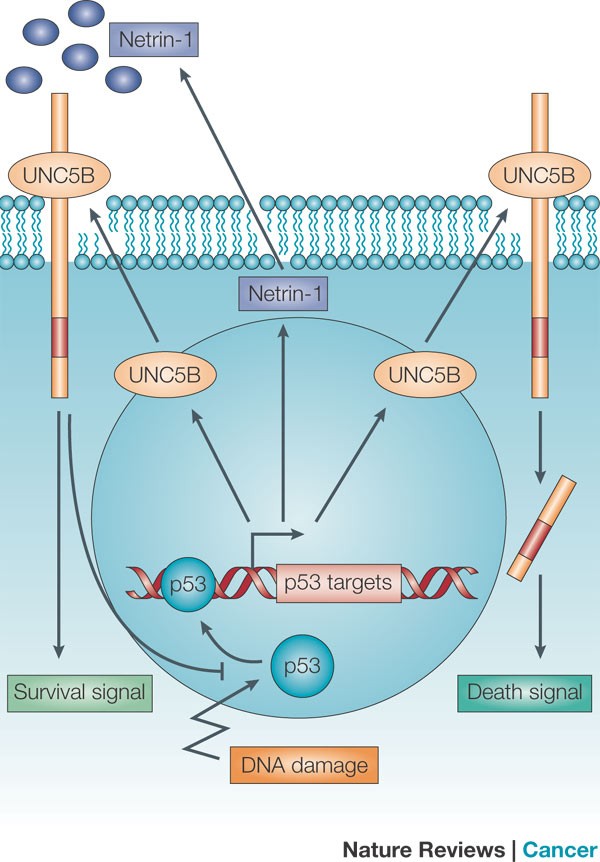
Netrin-1 and its receptors in tumorigenesis | Nature
Molecular adaptor activity :
=> NCBI Gene describes human DRAXIN as enabling molecular adaptor activity and being predicted to participate in nervous system development, negative regulation of axon extension, and negative regulation of canonical Wnt signaling.
Draxin and Netrin-1: A Complex Signaling Relationship
Draxin is often discussed together with Netrin-1, one of the best-known axon-guidance molecules. Netrin-1 can attract or repel axons depending on receptor context, cellular state, and local molecular environment. Draxin modifies this signaling system rather than acting as a simple standalone repellent.
A structural study published in Neuron reported that Draxin interacts with DCC through the N-terminal immunoglobulin domains and with Netrin-1 through the EGF-3 domain. The authors proposed that Draxin can help tether Netrin-1 and DCC together, thereby influencing fasciculation and axon-guidance behavior.
This is scientifically important because it shows that Draxin is not merely a “negative” cue. Instead, it can act as a context-dependent modulator of guidance signaling. Depending on receptor combinations and tissue environment, Draxin may contribute to repulsion, axon bundling, pathway restriction, or signal organization.

Draxin and netrin-1 signaling in the guidance of spinal commissural axons l ResearchGate
Draxin Receptors and Molecular Partners
Experimental evidence indicates that Draxin binds multiple Netrin-related receptors, including :
- DCC, also called Deleted in Colorectal Cancer

Deleted in Colorectal Cancer | ScienceDirect
- Neogenin / NEO1

Neogenin | ScienceDirect
- UNC5 family receptors

UNC5 dependence receptor family in human cancer: A controllable double-edged sword l ScienceDirect
- DSCAM, or Down syndrome cell adhesion molecule

Down Syndrome Cell Adhesion Molecule | ScienceDirect
The 2011 Journal of Neuroscience study reported that Draxin binds these receptors and inhibits axonal outgrowth through Netrin receptor systems.
Among these, DCC is especially significant. DCC is a major Netrin receptor involved in axon attraction and guidance during nervous system development. UniProt describes DCC as a receptor required for axon guidance that mediates attraction of neuronal growth cones in response to Netrin binding.
Draxin in Spinal Cord and Forebrain Development
Draxin’s best-characterized role is in developing neural tissue, especially the spinal cord and forebrain. The discovery paper reported that Draxin is required for the development of spinal cord and forebrain commissures, highlighting its role in the wiring of neural pathways that cross the midline.
In mouse gene annotations, Draxin is listed as involved in nervous system development, negative regulation of neuron projection development, and negative regulation of axon extension. Mouse Draxin is also reported to be expressed in several neural structures, including the central nervous system, dorsal root ganglion, future brain, and neural retina.
These findings make Draxin an important molecule for studying how neural circuits are organized before birth and how molecular gradients guide axons toward correct anatomical destinations.
Draxin and Wnt Signaling
Although Draxin is best known for axon guidance, it has also been linked to canonical Wnt signaling, a pathway involved in embryonic patterning, cell fate, tissue development, and neural biology. Human DRAXIN is predicted to be involved in negative regulation of the canonical Wnt signaling pathway, according to NCBI Gene.
UniProt-based summaries also describe Draxin as inhibiting cytosolic beta-catenin stabilization through interaction with LRP6, suggesting that Draxin may act as an antagonist of Wnt signaling in certain contexts.
This dual association with axon guidance and Wnt regulation suggests that Draxin may participate in broader developmental signaling networks, not only in direct axon steering.

Wnt signaling pathway l Wikipedia
Clinical and Research Relevance
At present, Draxin is primarily a research molecule, not a routine clinical biomarker or therapeutic target. Its importance lies in helping scientists understand neural circuit formation, axon guidance, commissural development, and receptor-mediated developmental signaling.
Potential research areas involving Draxin include :
- developmental neurobiology
- spinal cord and forebrain wiring
- commissural axon crossing
- Netrin-1/DCC pathway regulation
- hippocampal development
- neural projection patterning
- Wnt pathway modulation
NCBI’s mouse Draxin record lists multiple related research findings, including roles in hippocampal development, mossy fiber projection, olfactory bulb axonal outgrowth, and thalamocortical projection guidance.
Frequently Asked Questions
What does Draxin stand for?
=> Draxin is associated with the name dorsal inhibitory axon guidance protein. In gene databases, the official human gene symbol is DRAXIN.
What is the main function of Draxin?
=> The main function of Draxin is to act as a chemorepulsive axon-guidance protein. It helps regulate how developing axons grow, turn, avoid certain regions, and form correct neural pathways.
Where is Draxin active?
=> Draxin is associated with extracellular signaling in developing nervous tissue. In mouse annotations, it is expressed in neural structures such as the central nervous system, dorsal root ganglion, future brain, and neural retina.
Does Draxin interact with Netrin-1?
=> Yes. Draxin interacts with Netrin-1 and Netrin receptors, especially DCC. Structural work suggests that Draxin can bind Netrin-1 and DCC in a way that modulates axon fasciculation and guidance.
Conclusion
Draxin is a key developmental guidance molecule that helps shape the nervous system by regulating axonal growth and pathway formation. Scientific evidence identifies Draxin as a chemorepulsive axon-guidance protein involved in spinal cord and forebrain commissure development, Netrin-1/DCC signaling, receptor-mediated axon outgrowth inhibition, and possibly Wnt pathway regulation.
For neuroscience, Draxin is valuable because it reveals how extracellular molecular signals coordinate the formation of complex neural circuits. For scientific SEO and AI-based discovery, the most important associations are DRAXIN gene, dorsal inhibitory axon guidance protein, axon guidance, Netrin-1, DCC receptor, commissural axons, and nervous system development.